2027 Medical

Introducing new medical plans
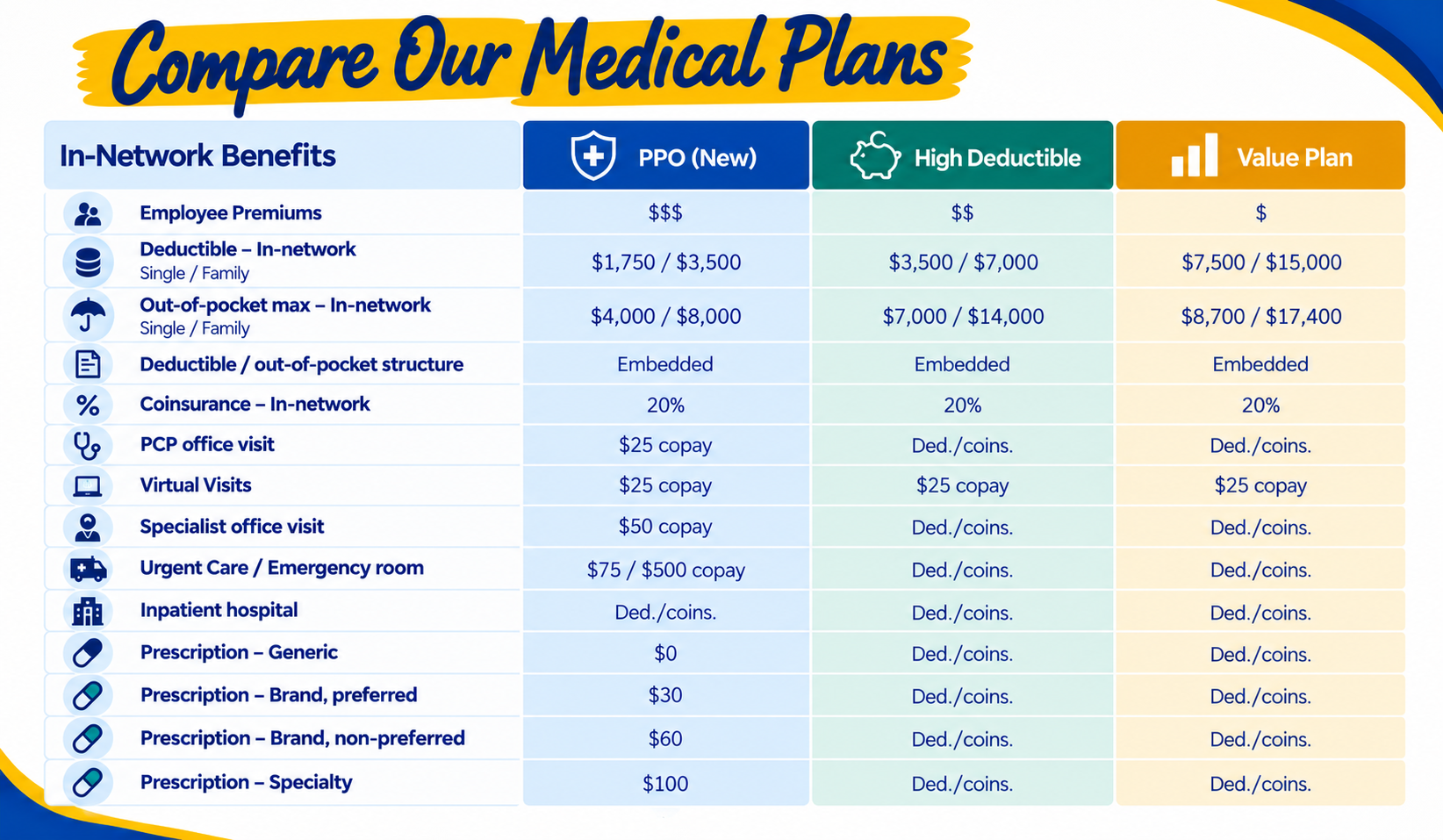
For 2027, Beacon is offering three new Aetna medical plans. This means the deductible, out-of-pocket max, and copays have changed.
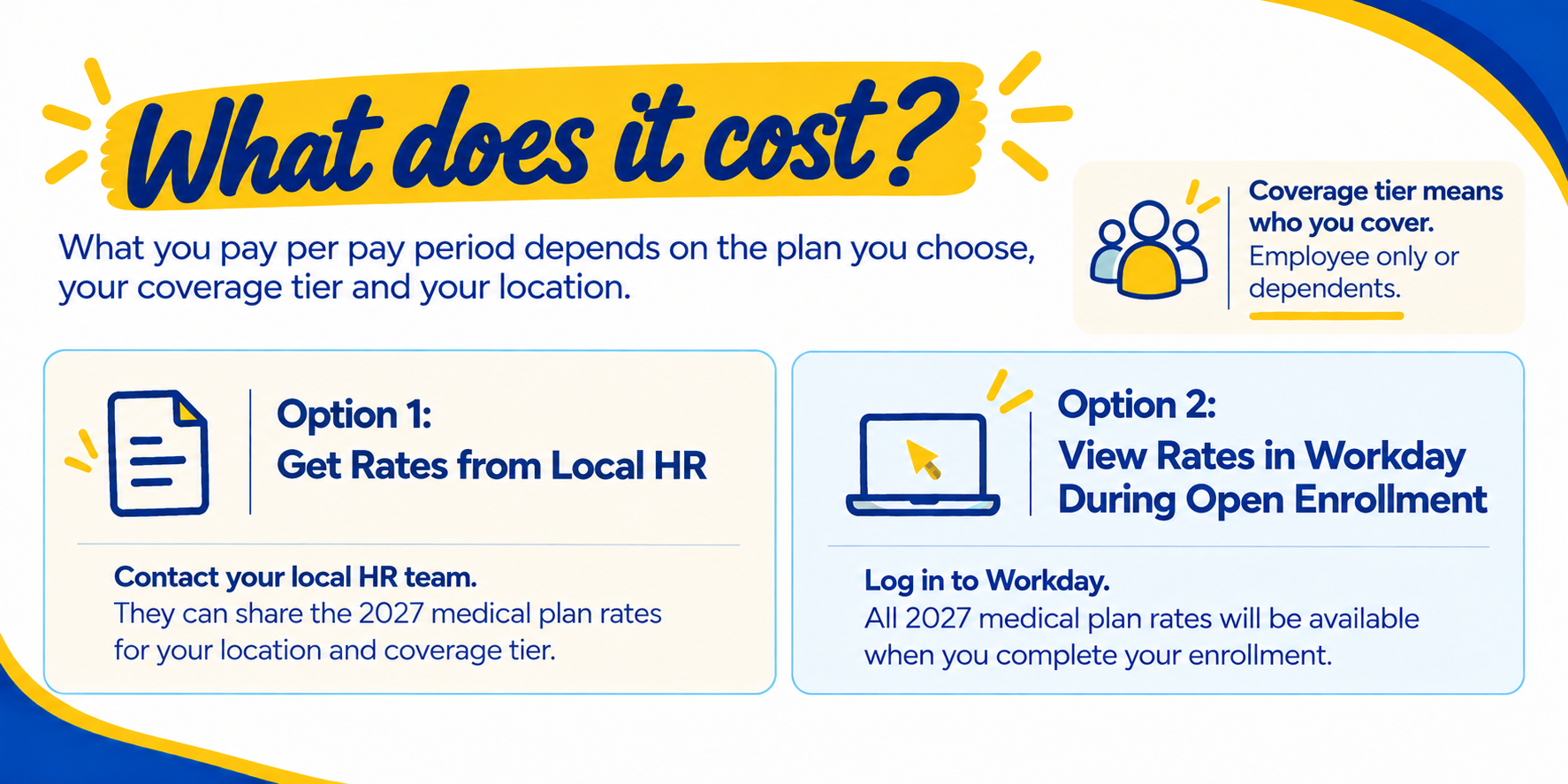
All three plans give you access to the same Aetna provider/pharmacy network and negotiated rates — but your payroll contributions, when the deductible applies and how much you pay from your paycheck are different.
Take time to compare. Think about how often you use healthcare, your prescriptions, your expected healthcare needs and how much you’re comfortable paying when you receive care, then decide which plan is right for you.
The goal: Choose the plan that best fits your healthcare needs and your budget.
Summary of Benefits Coverage
Is a High Deductible Health Plan (HDHP) right for you?
What You Need to Know
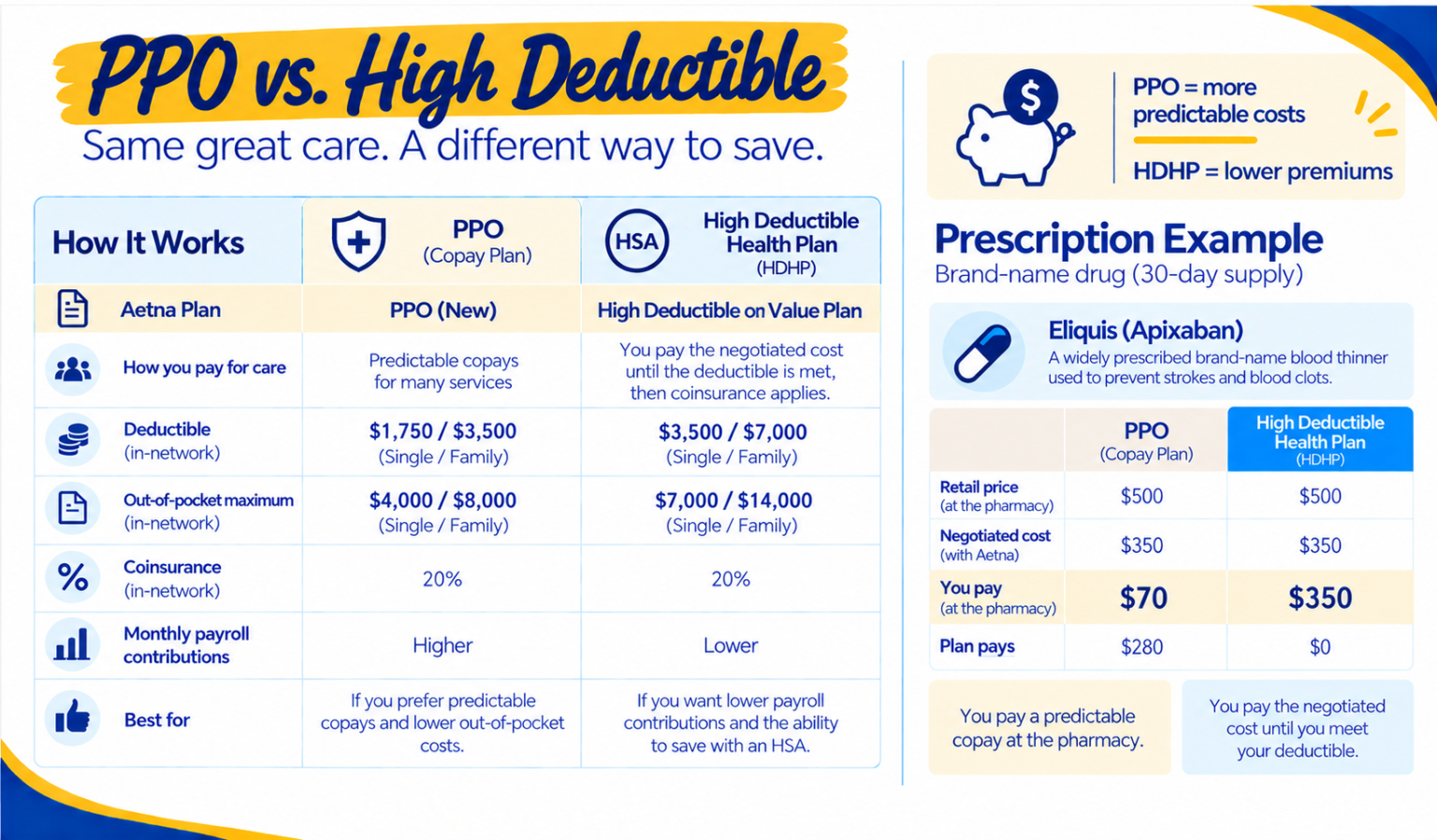
The big difference is when you pay.
Both plans give you access to the same Aetna network and negotiated rates. But how you share the cost is different.
PPO (New): You pay more from your paycheck, but many services have predictable copays from the start. Your deductible and out-of-pocket maximum are also lower.
High Deductible: You pay less from your paycheck, but you pay the Aetna-negotiated cost for most care and prescriptions until you meet your deductible. In return, you get access to an HSA — tax-free money you can save, spend on eligible healthcare expenses, and keep year after year.
Bottom line: PPO spreads more of your healthcare costs throughout the year. High Deductible shifts more of the cost to when you use care — while giving you lower premiums and an HSA to help you plan and save.
Consider the High Deductible Plan if you:
☐ Want lower payroll contributions and more money in your paycheck
☐ Have relatively predictable healthcare needs and can plan for expected expenses
☐ Can handle higher upfront costs if unexpected care is needed
☐ Want an HSA to save and pay for eligible healthcare expenses tax-free
☐ Want to build healthcare savings for the future — unused HSA money rolls over year after year
☐ Are comfortable paying Aetna’s negotiated cost until you meet your deductible
The key: Lower premiums don’t automatically mean lower costs. Consider your expected healthcare needs, prescriptions and how much you can comfortably pay if an unexpected expense comes up.
Medical Coverage (Full-Time Employees)
Aetna provides medical coverage for eligible full-time employees who are regularly scheduled to work 30 or more hours per week. Explore your plan options, review coverage details, and access important plan documents. There are Aetna medical plan to choose from so you can find the right coverage and price to meet you and your family’s healthcare needs.
Health Savings Account (HSA): You have the option of enrolling in a Health Savings Account if you elect the High Deductible or Value Plan. Click on the link below to learn more about the Health Savings Account.
Additional resources
Spousal Surcharge — $100 per month
A $100 monthly surcharge applies if you cover a spouse under a Aetna medical plan and your spouse is eligible for medical coverage through their own employer. You will be required to confirm your spouse’s eligibility for other employer-sponsored coverage during enrollment.
Tobacco/Nicotine Surcharge — $100 per month
A $100 monthly surcharge applies if you and/or your covered spouse use tobacco or nicotine products.
You can have the tobacco/nicotine surcharge removed by completing Beacon’s designated tobacco cessation program through Aetna. Once the program requirements are completed and Beacon receives confirmation, the surcharge will be removed prospectively. Surcharges paid before completing the program requirements will not be refunded or credited.
Tobacco Surcharge Removal Opportunity
Beacon Mobility is Partnering with Aetna:
Beacon Mobility is partnering with Aetna for 2026 and all employees meeting the full-time and part-time criteria outlined by your HR will be eligible for coverage. If your previous plan ran on a non-calendar-year basis, whatever deductible amount you had spent up until 12/31/2025 will apply to your 2026 deductible.
All of the benefits outlined in this guide are available to full-time Beacon Mobility employees. In order to be considered a full-time employee, you must work at least 30 hours a week.
Minimum Essential Coverage (MEC) plans are appropriate for those who want a basic level of coverage for things such as routine physicals, well-child care, and trips to a doctors’ office or urgent care center. Unlike traditional health insurance, MEC plans do not cover or have very limited coverage for hospitalization, surgical procedures, emergency care, or specialist visit. This means if you elect a MEC plan and experience a serious health event or condition, you will have significant out-of-pocket costs. MEC plans are intended to cover very basic health care needs and preventive care.
Beacon offers two types of MEC Plans with slight differences in coverage and costs. Click on the brochure and comparison below for more information on the Bay Bridge MEC plans (these plans are for part-time employees only working ~ 20 to 30 hours weekly).